
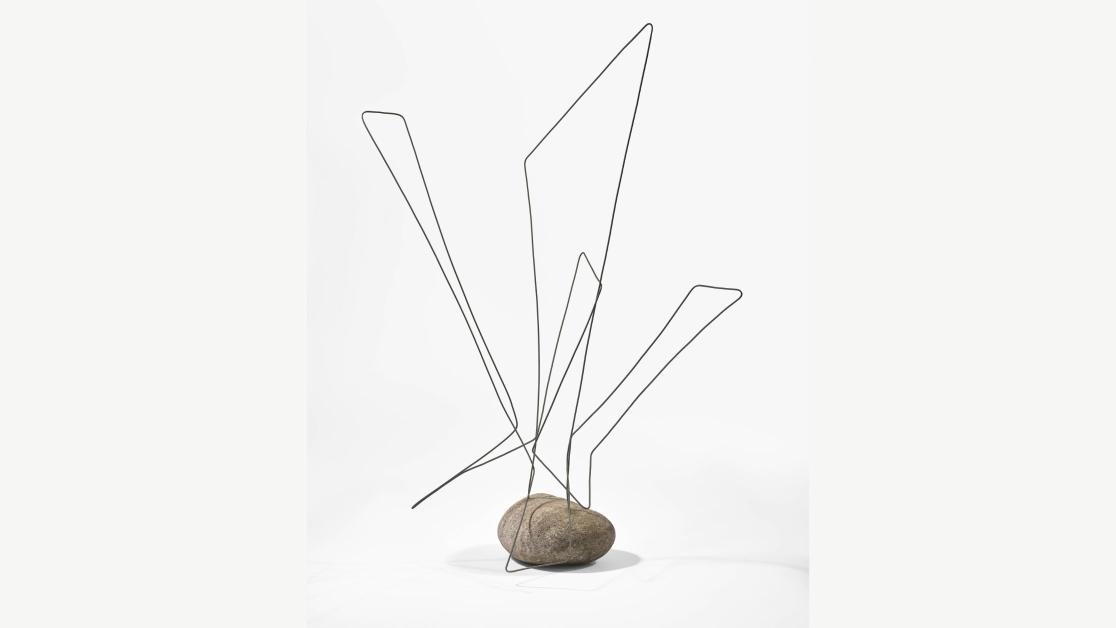
Photo by Andy Romer, courtesy of the National Trust for Historic Preservation.
Photo by Andy Romer, courtesy of the National Trust for Historic Preservation.
Nelson Rockefeller displayed his son Michael’s Untitled (undated, above) alongside works by renowned modern artists at Kykuit.
In communities across America, museums serve as engines of social good. Research indicates that museums boost visitors’ mental and physical health, combat feelings of social isolation, and consistently rank among the most trusted institutions in the United States. Communities with access to cultural institutions like museums rank better on health, happiness, and social cohesion indicators. In a time when polarization is on the rise and membership in traditional connectors like churches and social clubs is on the decline, the role of museums has never been more critical.
The Rockefellers’ longstanding commitment to the arts, shared by their philanthropic institutions, reflects an evolving understanding of the power of museums to bridge cultures, preserve history, and foster understanding of the human experience. John D. Rockefeller, Jr., built an important collection of Chinese art now on display for the public at Kykuit, the historic Rockefeller estate at The Pocantico Center. His wife, Abby Aldrich Rockefeller, was instrumental in bringing modern art to American audiences and helped found New York’s Museum of Modern Art (MoMA) in 1929. Their son and RBF cofounder Nelson Rockefeller inherited his parents’ passion for the arts, adding more than 70 modern sculptures to the grounds surrounding Kykuit and serving as chairman of the MoMA.
Nelson also shared a deep interest in Indigenous art with his own son, Michael C. Rockefeller, and built a collection of Indigenous paintings and sculptures while championing these works as essential expressions of global human creativity. In 1954, Nelson donated his collection to help found the Museum of Primitive Art in Manhattan. In 1969, its collections—including 400 pieces acquired by Michael—were transferred to the Metropolitan Museum of Art.
After years of renovation, The Met last month unveiled the newly reimagined Michael C. Rockefeller Wing, showcasing works from five continents and hundreds of cultures with renewed dedication to representing a broader perspective on a still-unfolding history of Indigenous art. The wing honors the life and legacy of Michael, who passed away on an anthropological expedition to New Guinea in the 1960s. The RBF provided grantmaking support for programming at The Met’s new wing to deepen knowledge and understanding of the arts of Africa, the Ancient Americas, and Oceania and illuminate new narratives within its collection.
Beyond the halls of The Met, the RBF continues its support of art museums and other cultural institutions across New York City. Particularly in uncertain times, the arts play a critical civic role in shedding light on important social, economic, and political issues; breaking down barriers; helping society heal after crisis and hardship; recognizing communities that have been historically underrepresented or harmed by past patterns of discrimination; and offering hope for a better future. Artists are true innovators that spark creativity, inspiration, and imagination, and museums play a critical role in supporting and memorializing that innovation for visitors today and for generations to come.