
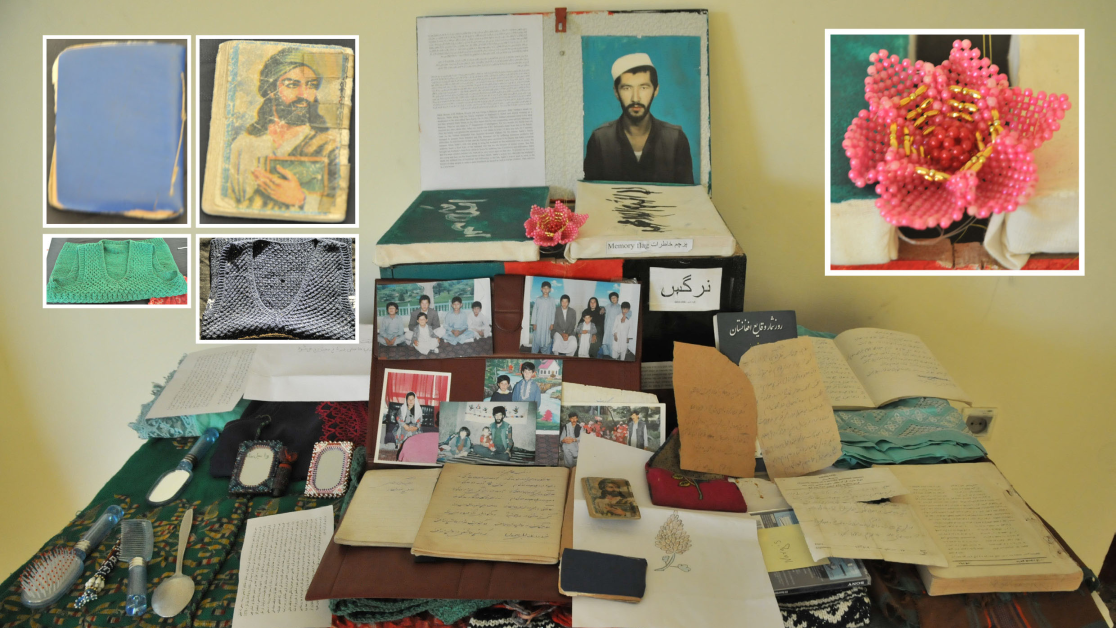
Photo courtesy of Nagis and AHRDO.
Photo courtesy of Nagis and AHRDO.
Through facilitated workshops with AHRDO, family members construct metal and wooden "memory boxes" to collect personal objects and stories of war victims. This box memorializes Sakhidad Hedayat, who was killed in Kabul City on November 22, 1999.
As early supporters of the United Nations, the Rockefeller Brothers envisioned a global body capable of upholding peace, security, and human rights. Building on this belief in multilateral cooperation, the RBF’s grantmaking reflects deep and evolving support for global accountability. Our philanthropic efforts have supported independent civic actors leveraging international legal and governance mechanisms on behalf of victims and survivors to push for transparency and justice where their own governments have failed. RBF Peacebuilding program grantees working in Syria and Afghanistan offer recent examples of these efforts.
The Syria Campaign, established during Syria’s civil war, has become a powerful voice for Syrians calling for dignity, freedom, and accountability. As advocates and storytellers, the Syria Campaign works closely with Syrian civil society to spotlight the atrocities of war and preserve the memory of the disappeared. Through tireless international advocacy, they have ensured that Syrian voices are heard in global institutions. Their work catalyzed the creation of the U.N. Independent Institution on Missing Persons in Syria (IIMP) to support a Syrian-led effort, involving families and survivors, to preserve evidence, investigate crimes, and hold all perpetrators to account.
Following the Taliban takeover of Kabul in August 2021, Afghan civil society has been keeping alive the possibility of future justice and accountability. Afghanistan Human Rights and Democracy Organization (AHRDO) has worked with survivors to promote healing, organize victim support networks, provide training on human rights and transitional justice, and tell the true stories of war since 2009. Today, AHRDO works in exile to investigate and document atrocity crimes, map patterns of violations, and advocate for accountability.
The Civic Engagement Project’s Afghanistan Justice Archive is preserving evidence of the Taliban’s increasingly repressive rule before it is lost, buried, or deliberately erased. The Archive collects and protects government documents, legal orders, and media reports, as well as personal testimonies of Afghan survival and resistance, since the Taliban’s 2021 return to power.
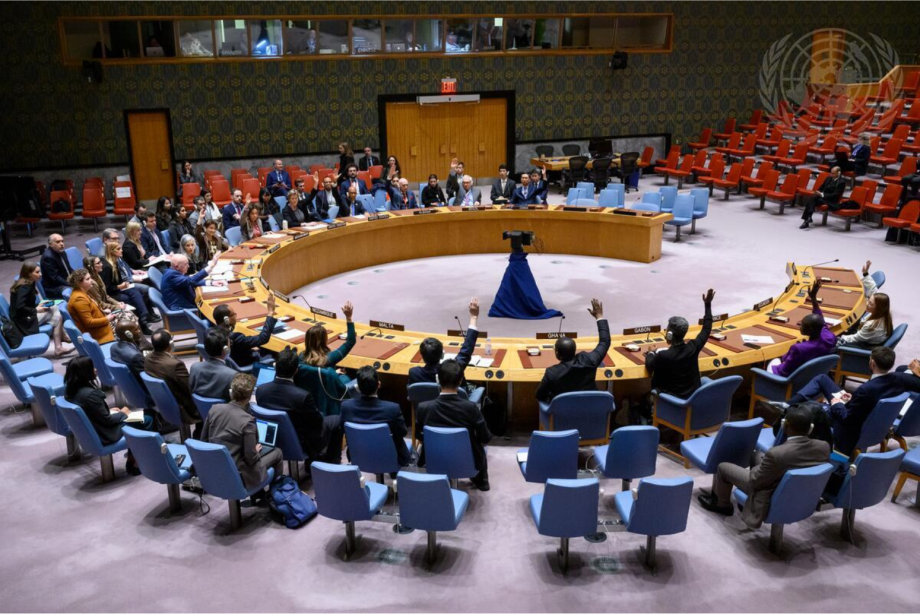
UN Photo by Loey Felipe.
Security Council unanimously adopts resolution 2681 (2023) condemning the decision by the Taliban to ban Afghan women from working for the United Nations in Afghanistan, which undermines human rights and humanitarian principles.
In October 2025, these efforts yielded results. The UN Human Rights Council announced the establishment of the Independent Investigative Mechanism for Afghanistan “to collect, consolidate, preserve, and analyze evidence of international crimes and the most serious violations of international law, including those that may also amount to violations and abuses of international human rights law, committed in Afghanistan.” This mechanism and other international legal efforts have given special attention to the Taliban’s draconian treatment of women and girls, as advocates push for the codification of gender apartheid in UN definitions of crimes against humanity.
Organizations like these operate in environments of extreme risk. Their brave work is critical to the integrity of international systems meant to uphold human rights. By elevating the voices of people directly affected by conflict, their work reminds us that justice does not begin in courtrooms, political offices, or international institutions—it begins with memory, courage, and organizing.
As the global landscape grows more volatile, our commitment to supporting civil society remains unwavering. The Syria Campaign, AHRDO, and the Afghanistan Justice Archive are among many organizations around the world helping shape a future in which justice may someday take root, for their people and all others.