
RBF President and CEO Stephen Heintz Announces Plans to Retire in 2026
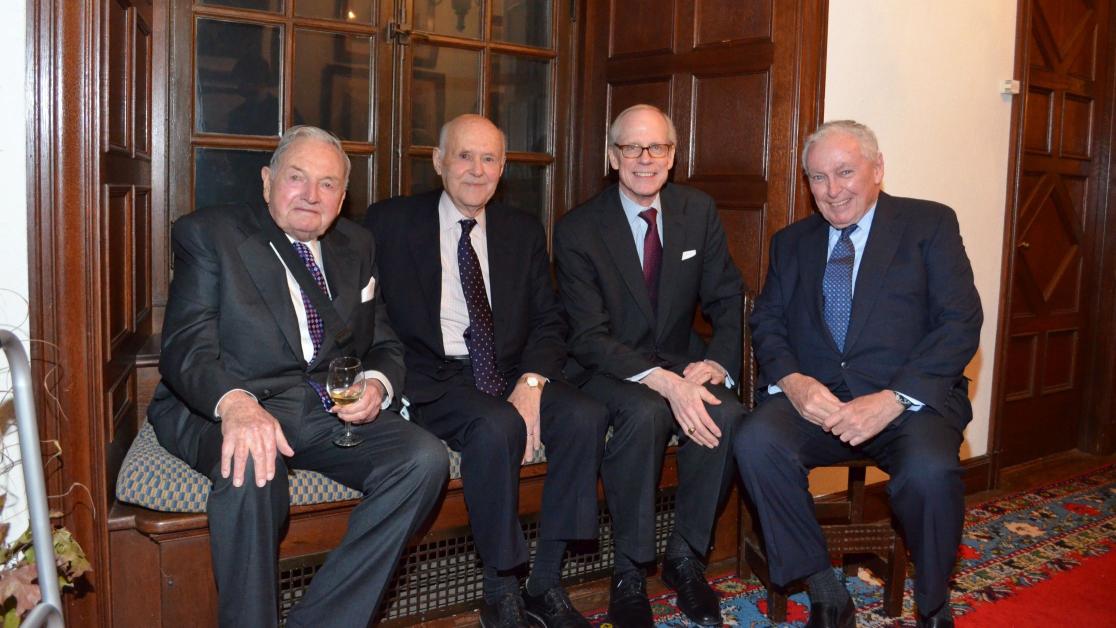
RBF cofounder David Rockefeller with presidents Bill Dietel (1975–1987), Stephen Heintz (2001-2026), and Colin Campbell (1988–2000) in 2009.
The Rockefeller Brothers Fund (RBF) announced today that President and CEO Stephen Heintz plans to retire in spring 2026, when he will celebrate 25 years as the foundation's leader. The RBF Board of Trustees will begin the search for Heintz’s successor later this year.
“With great intellect, diplomacy, and empathy, Stephen Heintz has amplified the impact of our modest grantmaking and transformed the Rockefeller Brothers Fund into a truly global foundation,” said Joseph Pierson, chair of the RBF Board of Trustees. “As the longest-serving president in RBF history, Stephen’s unwavering leadership and sustained progress through so many turbulent moments—the 9/11 attacks, the 2008 financial crisis, the COVID-19 pandemic—inspire hope for the more just, sustainable, and peaceful world we envision. He has not only masterfully guided the Fund for the last 25 years, but he has set it up for success in the next 25.”
“When I joined the RBF, I had only ever experienced philanthropy from the other side, the grantee side, and I aimed to maintain that perspective throughout my leadership of the Fund. Every day, our thoughtful, tenacious civil society partners make the world more fair, inclusive, and safe,” said Stephen Heintz, president and CEO of the RBF. “As I approach this 25-year milestone, I feel humbled and privileged to work alongside expert colleagues and resolute trustees in stewarding the Fund into its next chapter with optimism and conviction.”
The RBF Board of Trustees has engaged Russell Reynolds Associates to support the search for a new president. Prospective candidates are invited to review the job specification and submit a CV and cover letter to [email protected].
RBF cofounder David Rockefeller with presidents Bill Dietel (1975–1987), Stephen Heintz (2001-2026), and Colin Campbell (1988–2000) in 2009.
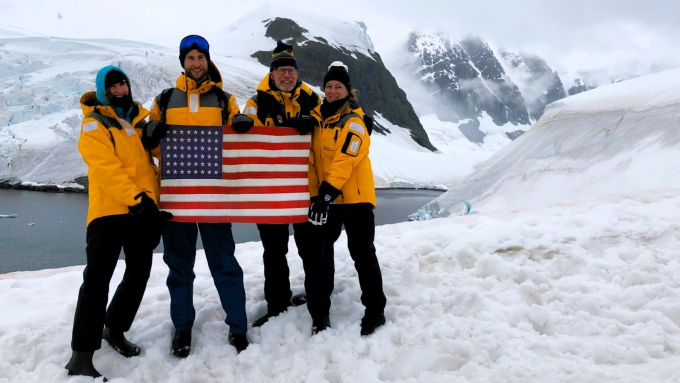
Valerie Rockefeller, Justin Rockefeller, Stephen Heintz, and Jennifer Nolan display a replica of the flag given to John D. Rockefeller, Jr. by General Richard E. Byrd on a trip to Antarctica with the Nature Conservancy to observe the impact of climate change in 2018.
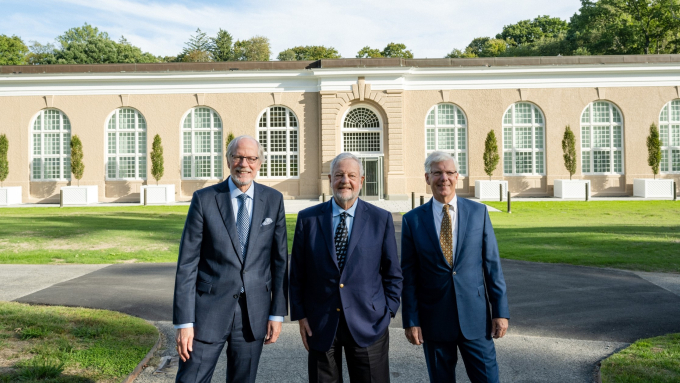
Photo by Aslan Habib Chalom.
Stephen Heintz, David Rockefeller, Jr., and Joseph Pierson celebrate the opening of the David Rockefeller Creative Arts Center at Pocantico in 2022.
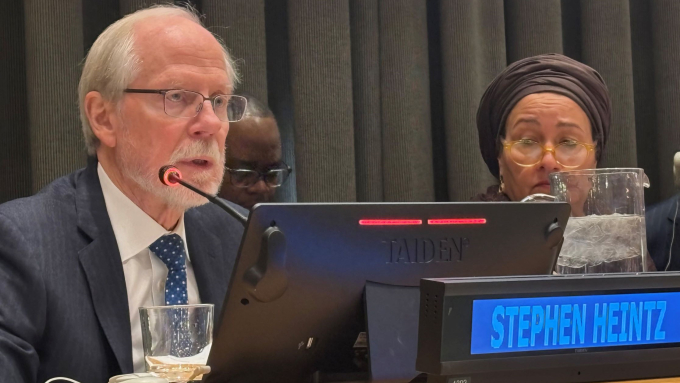
Photo by Hollie Russon Gilman.
Stephen Heintz addresses the United Nations General Assembly in 2025.
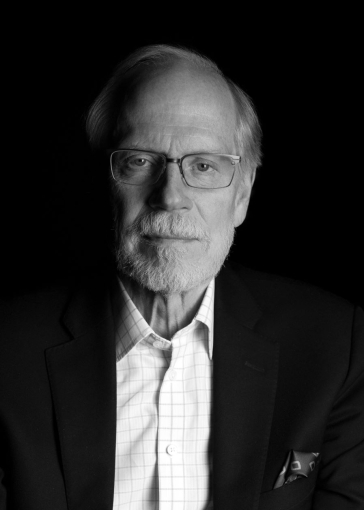
Photo by Christopher Prentiss Michel.
Rockefeller Brothers Fund President and CEO Stephen Heintz, 2025.
Stephen Heintz joined the Rockefeller Brothers Fund in 2001 and shortly thereafter consolidated the foundation around four interdependent themes that continue to guide it today: democracy, peace, environment, and the arts. He introduced “pivotal place” programs to make long-term commitments to unique geographic areas and tailor, test, and scale solutions that could have global impact. Heintz coined the term “acupuncture philanthropy” to describe the Fund’s efforts to leverage modest financial assets to trigger larger systemic change on critical issues. Over his two and a half decades at the RBF, grantmaking surged from $25.6M in 2001 to an anticipated $56.7M in 2025.
Heintz garnered international attention in 2014 when he announced the RBF, established by the grandsons of oil magnate John D. Rockefeller, would divest from fossil fuels. In the following decade, he championed the cause of divestment as both a moral and a financial imperative. As of February 2025, the Fund’s endowment was valued at $1.4 billion and boasted an above-market 7.76 percent 10-year annualized return with an investment portfolio that is now 99.7 percent fossil fuel free.
Heintz’s term as president was marked by efforts to bring adversaries together in dialogue, often with monumental results.
In 2002, he led the RBF’s joint initiative with the UN Association of the USA to open a Track II dialogue that helped lay the groundwork for the 2015 Iran nuclear deal. The Iran Project, which he cofounded, continues to advocate for a peaceful resolution with Iran despite the U.S. withdrawal from this historic agreement.
Heintz formed Philanthropy Bridging Divides, a forum for open dialogue among foundations spanning the political spectrum, and cochaired the American Academy of Arts and Sciences’ bipartisan Commission on the Practice of Democratic Citizenship starting in 2017. He then went on to establish the Trust for Civic Life in 2024. The Trust is a $50 million cross-ideological philanthropic investment in local democracy-building to help bring people together across divides to improve their communities.
A lover of the arts, Heintz oversaw the $25 million project to transform John D. Rockefeller’s orangerie on the former family estate in Tarrytown, which the RBF operates as a conference center and artist residence, into a cultural hub. Launched in 2022, the David Rockefeller Creative Arts Center at Pocantico offers a gallery, performance space, and art studio that unite local audiences with world-class artists in the creative process.
Stephen Heintz began his professional life in public service for the state of Connecticut, where he held two cabinet positions: first as commissioner of social services and later as commissioner of economic development. Before joining the RBF in 2001, Heintz cofounded the public policy think tank Dēmos and served as executive vice president for the EastWest Institute in Prague during Eastern Europe’s transition to liberal democracy. He is a fellow of the American Academy of Arts and Sciences and a member of the Council on Foreign Relations and the China Council for International Cooperation on Environment and Development. He chairs the board of the Quincy Institute and serves on the boards of the International Crisis Group and the Rockefeller Archive Center. He is the recipient of the Council on Foundations 2018 Distinguished Service Award. In 2024, he published A Logic for the Future: International Relations in the Age of Turbulence.