
Image courtesy of the Rockefeller Archive Center.
Image courtesy of the Rockefeller Archive Center.
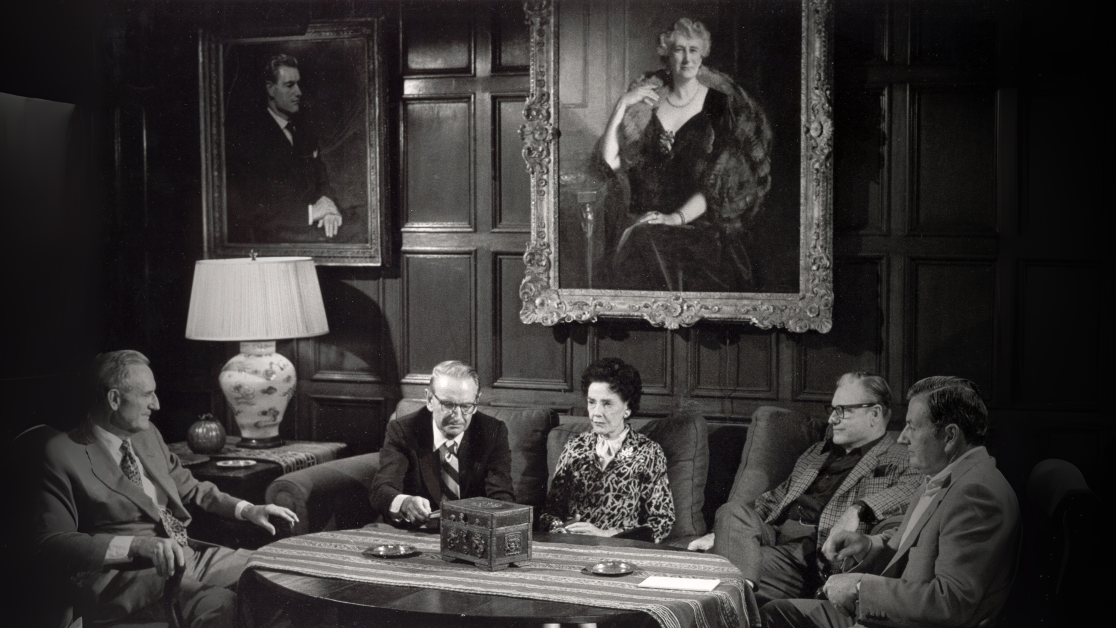
RBF cofounders John 3rd, Laurance, Abby, Nelson, and David Rockefeller (not pictured: Winthrop Rockefeller) gather under a portrait of their mother, Abby Aldrich Rockefeller.
American CEOs are swiftly rolling back policies that project empathy and uphold dignity—necessary ingredients to sustain the performance and outcomes their organizations have profited from, especially during the pandemic era. Many have gutted programs intended to address the lasting impacts of historic discrimination that allowed workplaces to have a rightful place in redressing racism, sexism, and bigotry and preserving human decency.
Care, it seems, has an expiration date.
The last 85 years at the Rockefeller Brothers Fund (RBF) tell a different story. In 1928, Abby Aldrich Rockefeller—arguably one of the most privileged women in the world, with an innovative spirit and courage beyond her time—addressed a letter to her three eldest sons, John 3rd, Nelson, and Laurance, who would go on to establish the RBF with their brothers Winthrop and David in 1940. In it, she writes, “one of the greatest causes of evil in the world is race hatred or race prejudice; in other words, the feeling of dislike that a person or a nation has against another person or nation without just cause.” She goes on to implore her sons “to give special consideration to all who are in any way repressed.”
Abby’s plea undergirds the enduring values that have guided the RBF and remain the foundation of our resilience today. We are intentional about the connection between our values and our work. Our values shape how we use our talent to drive grantmaking and investing efforts. We have supported our grantees, convened leaders, stood in solidarity through volunteerism in our community, and responded to targeted attacks on our work through challenging times.
But these values also compel us to attend closely to staff and trustee well-being. The workplace is a reflection of society that cannot be detached from human experience, and justice and equity are both societal and personal imperatives. Building a workplace culture that reflects the principles of fairness and belonging bolsters the talent and builds the resilience required to advance our mission of contributing to social change, even when risky. Remaining diligent during these challenging times can take a toll if we do not intentionally support each other as people.
In May, a group of RBF staff and trustees, including some of Abby’s descendants, spent a full day at the National Museum of African American History and Culture, bearing witness to stories of trial, tribulation, and progress. This was not only a reminder of how long the harms of hate and discrimination persisted but also a source of inspiration as we navigate the present moment.
When Abby wrote, the nation was experiencing both cultural renaissance and economic growth, but also racial violence, restrictive immigration laws, and systemic discrimination that reinforced social hierarchy, as well as the birth of the American billionaire class, including her father-in-law. Nearly a century later, her words still resonate, and we are proud that they are a driving force of many of our aspirations today.
Today’s challenges are not only political or legal, but also narrative. They are the next iteration of a recurring cycle that seeks to curtail equity and justice whenever they threaten entrenched power—at the polls, in the boardroom, or in the workplace. Of course, if previous efforts to challenge entrenched power had not succeeded, we would not be experiencing today’s backlash.
History teaches us not to retreat, but to remain resilient and build our collective strategy. As Abby Aldrich Rockefeller wrote in 1928, “It is not enough to rid ourselves of prejudice—we must undo it.” In all facets of our work, her charge remains our own.