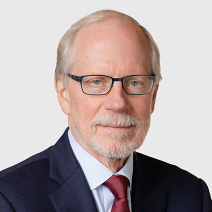
Stephen B. Heintz is president emeritus of the Rockefeller Brothers Fund (RBF). From 2001 to 2026, he served as president and CEO of the RBF, a private family foundation with an endowment of approximately $1.3 billion that advances social change for a more just, sustainable, and peaceful world. Heintz coined the term “acupuncture philanthropy” to describe his philanthropic approach of leveraging modest financial assets to trigger larger systemic change on critical issues.
Heintz, who began his professional life in public service for the state of Connecticut, has devoted his career to strengthening democratic culture and institutions to better serve citizens. Before joining the RBF in 2001, Heintz cofounded and served as president of Dēmos, a public policy organization that works to reduce political and economic inequality and to broaden citizen engagement in American democracy. As cochair of the American Academy of Arts and Sciences national Commission on the Practice of Democratic Citizenship, he co-authored the report Our Common Purpose: Reinventing American Democracy for the 21st Century (2020).
On the international stage, Heintz served as executive vice president and chief operating officer for the EastWest Institute during the 1990s. Based in Prague, he helped propel civil society development, economic reform, and new international security structures in Central and Eastern Europe’s then-burgeoning democracies. In 2012, Polish President Bronislaw Komorowski awarded the Officer’s Cross of the Order of Merit to Heintz in recognition of his work to help build democratic institutions in Poland.
In 2002, he led the RBF’s joint initiative with the UN Association of the USA to open a Track II dialogue that helped lay the groundwork for the 2015 Iran nuclear deal. In 2007, Heintz convened a meeting of the Kosovo Unity Team and prominent global diplomatic figures at the Fund’s Pocantico Center, resulting in the Pocantico Declaration that set a path for the Kosovo independence process. Heintz is the author of A Logic for the Future: International Relations in the Age of Turbulence (2024).
In 2010, Heintz set an ambitious path to align investment of the Fund’s financial assets with its mission, resulting in its 2014 decision to divest from fossil fuels and establishing the RBF as a leader in mission-aligned investing.
Heintz is a fellow and board member of the American Academy of Arts and Sciences and a member of the Council on Foreign Relations, the China Council for International Cooperation on Environment and Development, and the Global Commission on Democracy and Multilateralism convened by Club de Madrid in 2025. He chairs the board of the Quincy Institute and serves on the boards of the International Crisis Group and the Rockefeller Archive Center. He is the recipient of the Council on Foundations 2018 Distinguished Service Award.